Wondering whether Monterey Peninsula real estate is heating up, cooling down, or simply changing shape? That question matters whether you are planning a purchase, thinking about a sale, or just trying to make sense of headlines that seem to conflict. The good news is that once you know which numbers to watch, local market reports become much easier to read. Let’s dive in.
Start With the County Baseline
A good first step is to understand the broad Monterey County picture before drilling down into individual cities. In the latest public snapshots for February 2026, county data points to a market that looks more balanced than overheated.
According to MLSListings Monterey County market data, the county median single-family sale price was $880,000, with 353 active listings, 115 closed sales, 3.5 months of inventory, 30 median days on market, and a 98% sale-to-list ratio. In C.A.R.'s February 2026 county release, Monterey County also showed a median sold price of $880,000, plus 4.4 months of unsold inventory and 33 median days on market.
Those small differences do not mean one source is wrong. They usually reflect different datasets and definitions. What matters is that both sources tell a similar story: Monterey County is not showing the kind of extreme conditions where every home flies off the market immediately.
Know Why Reports Can Differ
If you have ever compared two market reports and felt confused, you are not alone. Real estate data often varies slightly from source to source, especially when reports pull from different systems or measure inventory and timing in different ways.
C.A.R. also notes that county sales data is not seasonally adjusted, and median price changes can reflect the mix of homes that sold in a given month, not just true market movement. In other words, if more luxury homes close in one month, the median can rise even if values in your specific segment did not change much. That is why one-month changes are best read as directional rather than definitive.
Focus on the Right Indicators
When you read Monterey Peninsula real estate trends, a few metrics matter more than the headline price alone. These numbers help you understand pace, competition, and negotiating power.
Months of Inventory
The Unsold Inventory Index defined by C.A.R. measures how long it would take to sell current inventory at the current sales pace. As a general rule:
- Under 3 months tends to favor sellers
- 3 to 6 months is often more balanced
- Over 6 months tends to lean toward buyers
This is one of the fastest ways to gauge leverage in a market. It tells you whether supply feels tight, stable, or softening.
Days on Market
Median days on market tells you how long homes are taking to go into contract. Shorter timelines usually suggest stronger demand or sharper pricing. Longer timelines can point to a slower segment, more selective buyers, or a market where pricing and property condition matter more.
Sale-to-List Ratio
The sale-to-list ratio helps you understand how much negotiation is happening. A ratio at or above 100% means homes are selling at or above asking price. Ratios below 100% mean buyers are often negotiating below list.
On the Monterey Peninsula, ratios in the 97% to 99% range often suggest room for negotiation, but not necessarily major discounts. Context matters here, especially by city and price point.
Median vs. Average Price
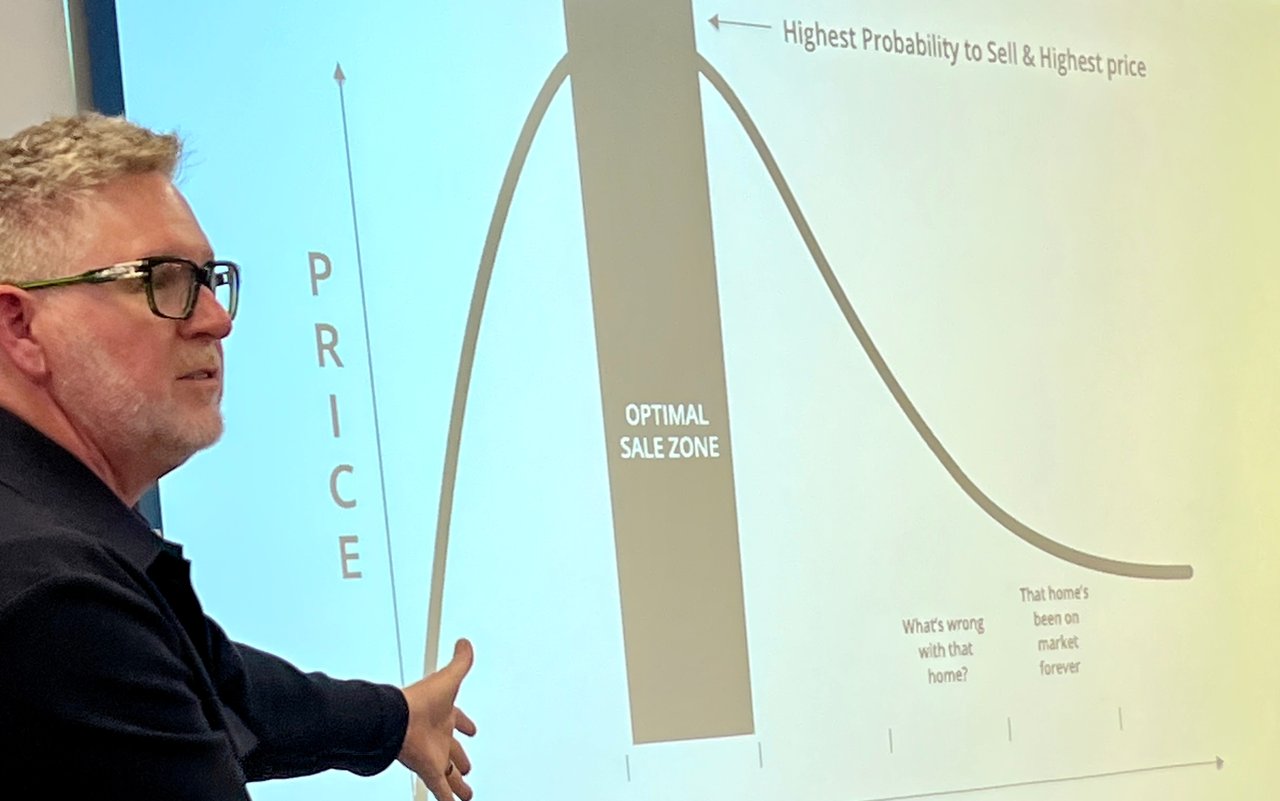
This is an important distinction in Monterey County. The median is the midpoint of all sales, while the average can be pulled upward by a small number of very high-end closings.
That makes the median more useful for most readers, especially in luxury-driven markets where a few estate sales can distort the average. If you are trying to understand day-to-day market conditions, median price usually gives a clearer view.
Price Per Square Foot
Price per square foot can be helpful, but only when you compare similar homes in the same area. Differences in lot size, views, updates, layout, and property type can make this metric misleading if you use it too broadly.
Think of it as a supporting data point, not a final answer. It is most useful when evaluating similar homes within the same submarket.
Add Statewide Context
Statewide trends can help you frame local conditions. In C.A.R.'s February 2026 release, California's average 30-year fixed mortgage rate was 6.05%, the statewide sales-price-to-list-price ratio was 99.3%, and median time on market was 29 days.
Compared with that backdrop, Monterey County appears slightly slower than the state overall, but still active enough that well-priced homes can move without prolonged delays. This is not a market defined by blanket bidding wars. It is a market defined by segmentation.
Read the Peninsula as Several Markets
One of the biggest mistakes buyers and sellers make is treating the Monterey Peninsula like one uniform market. It is not. Conditions can change quickly by city, property type, and price tier.
Seaside Moves Faster
In Seaside, the single-family median price was $810,000, with 15 days on market, 2.4 months of inventory, and a 99% sale-to-list ratio, based on MLSListings Seaside data. That combination points to a relatively fast-moving lower-to-mid price segment.
If you are buying in this range, preparation matters. Strong financing, a clear budget, and quick decision-making can make a meaningful difference when a well-priced property comes on the market.
Monterey and Pacific Grove Behave Differently
Nearby cities can show very different patterns. In MLSListings Monterey County city data, Monterey's median single-family price was $1,048,000, with 45 days on market, 3.9 months of inventory, and a 97% sale-to-list ratio.
Pacific Grove, by comparison, showed a median price of $1,220,000, with just 12 days on market, 3.1 months of inventory, and a 99% sale-to-list ratio. That is a clear reminder that county-wide trends only get you so far. For real decisions, you need to look at the specific city and the specific property type.
Carmel and Pebble Beach Are More Segmented
The luxury coast tells a different story. MLSListings Carmel market data shows Carmel single-family homes at a median price of $4,000,000, with 55 days on market and 7.4 months of inventory.
Pebble Beach showed a median price of $4,700,000, with 142 days on market and 4.7 months of inventory. These are slower, more segmented markets where pricing precision, presentation, and terms can matter more than speed.
The gap between median and average price also stands out here. Carmel's average sale price was $4.52 million versus a $4.0 million median, while Pebble Beach's average was $8.405 million versus a $4.7 million median. That tells you exactly why averages can be misleading in luxury markets.
Use Price Per Square Foot Carefully
Price per square foot also shows how varied the Peninsula really is. MLSListings reports roughly $673 in Seaside, $603 in Monterey, $1,008 in Pacific Grove, $1,285 in Carmel, and $1,765 in Pebble Beach.
Those numbers are useful, but they are not interchangeable. A coastal estate, a compact bungalow, and a renovated condo should not be judged by the same standard. On the Peninsula, price per square foot works best when you compare like with like.
Compare Property Types Separately
Another easy mistake is lumping detached and attached homes together. They often move at different speeds, even within the same city.
For example, in Monterey, condos and townhomes had a 95-day median days on market, compared with 45 days for single-family homes. In Carmel, attached homes had a 17-day median days on market, versus 55 days for single-family homes.
If you are buying or selling, that difference matters. A condo market report may not tell you much about single-family timing, and vice versa.
What Buyers Should Watch
If you plan to buy within the next 6 to 18 months, try not to rely on a single county headline. A balanced county market can still contain highly competitive pockets and slower luxury segments.
A better approach is to track the same submarket over several months and ask:
- Is inventory rising or falling?
- Are days on market getting shorter or longer?
- Is the sale-to-list ratio moving closer to or farther from 100%?
- Are you comparing the same property type each time?
This will give you a clearer read on whether leverage is shifting in the area you actually care about.
What Sellers Should Watch
For sellers, the most useful signal trio is inventory, days on market, and sale-to-list ratio. Together, those metrics tell you whether pricing power is strengthening or softening.
When inventory is lower and homes are moving quickly, sellers can often price more firmly. When days on market rise and the sale-to-list ratio slips further below 100%, the data usually points to a need for sharper pricing, stronger presentation, or more flexible negotiation.
That is especially relevant in Monterey, Carmel, and Pebble Beach, where smaller sample sizes can make a few listings shape the feel of the market. In nuanced segments like these, careful interpretation matters.
Keep Affordability in View
Affordability remains a major part of the Monterey County story. In C.A.R.'s fourth-quarter 2025 affordability report, only 12% of Monterey County households could afford a median-priced single-family home, with a minimum qualifying income of $226,400.
C.A.R.'s first-time buyer affordability data also showed Monterey County with a first-time buyer affordability index of 25, a median home price of $786,250, and a minimum qualifying income of $149,400. These figures help explain why demand can be strong in some segments while buyers remain highly payment-sensitive.
The Best Way to Read Trends
If you remember one rule, make it this: do not overreact to one month of data. Because county data is not seasonally adjusted and luxury markets are especially sensitive to sample size, a headline about prices rising or falling may only tell part of the story.
Instead, compare year-over-year trends and multi-month patterns. Ask whether inventory, market pace, and negotiation strength are all moving in the same direction. That is how you turn raw numbers into a more reliable view of the market.
If you want help interpreting Monterey Peninsula trends through the lens of your property, goals, or timing, William Smith offers a discreet, locally grounded perspective shaped by long experience across the Peninsula.
FAQs
What does months of inventory mean in Monterey Peninsula real estate?
- It measures how long it would take to sell the current inventory at the current sales pace. Under 3 months often favors sellers, while 3 to 6 months is usually more balanced.
Why do Monterey County real estate reports show different numbers?
- Reports can differ because they use different datasets, definitions, and timing. Small variations are normal, so it is better to focus on the overall pattern than on tiny gaps.
How should buyers read Monterey Peninsula market trends?
- Buyers should track the same city, neighborhood, and property type over several months, paying close attention to inventory, days on market, and sale-to-list ratio.
How should sellers read Monterey Peninsula market trends?
- Sellers should focus on inventory, days on market, and the sale-to-list ratio to understand pricing power and whether stronger presentation or more flexible negotiation may be needed.
Why is the median price more useful than the average price in Monterey County?
- The median is less affected by a few very high-end sales, which makes it more reliable in a market where luxury closings can pull the average upward.
Is Monterey Peninsula real estate one market or several submarkets?
- It is better understood as several submarkets, because places like Seaside, Monterey, Pacific Grove, Carmel, and Pebble Beach can show very different pricing, pace, and negotiating patterns at the same time.