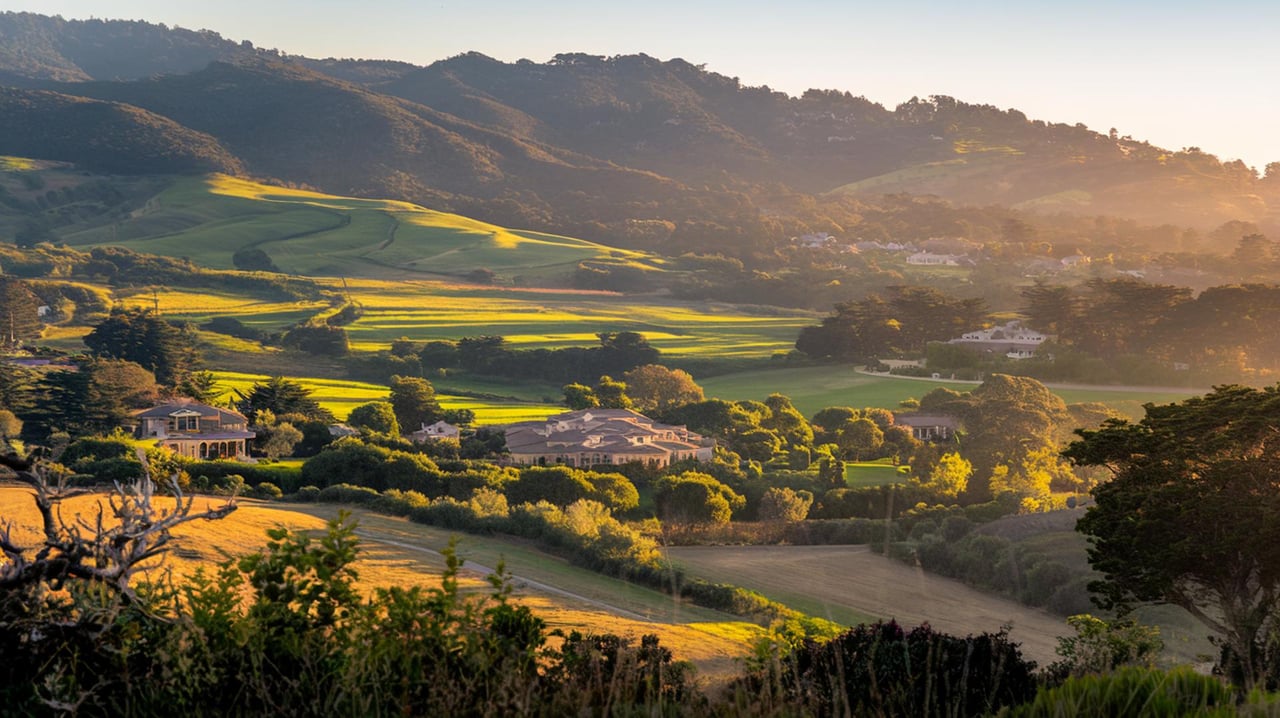
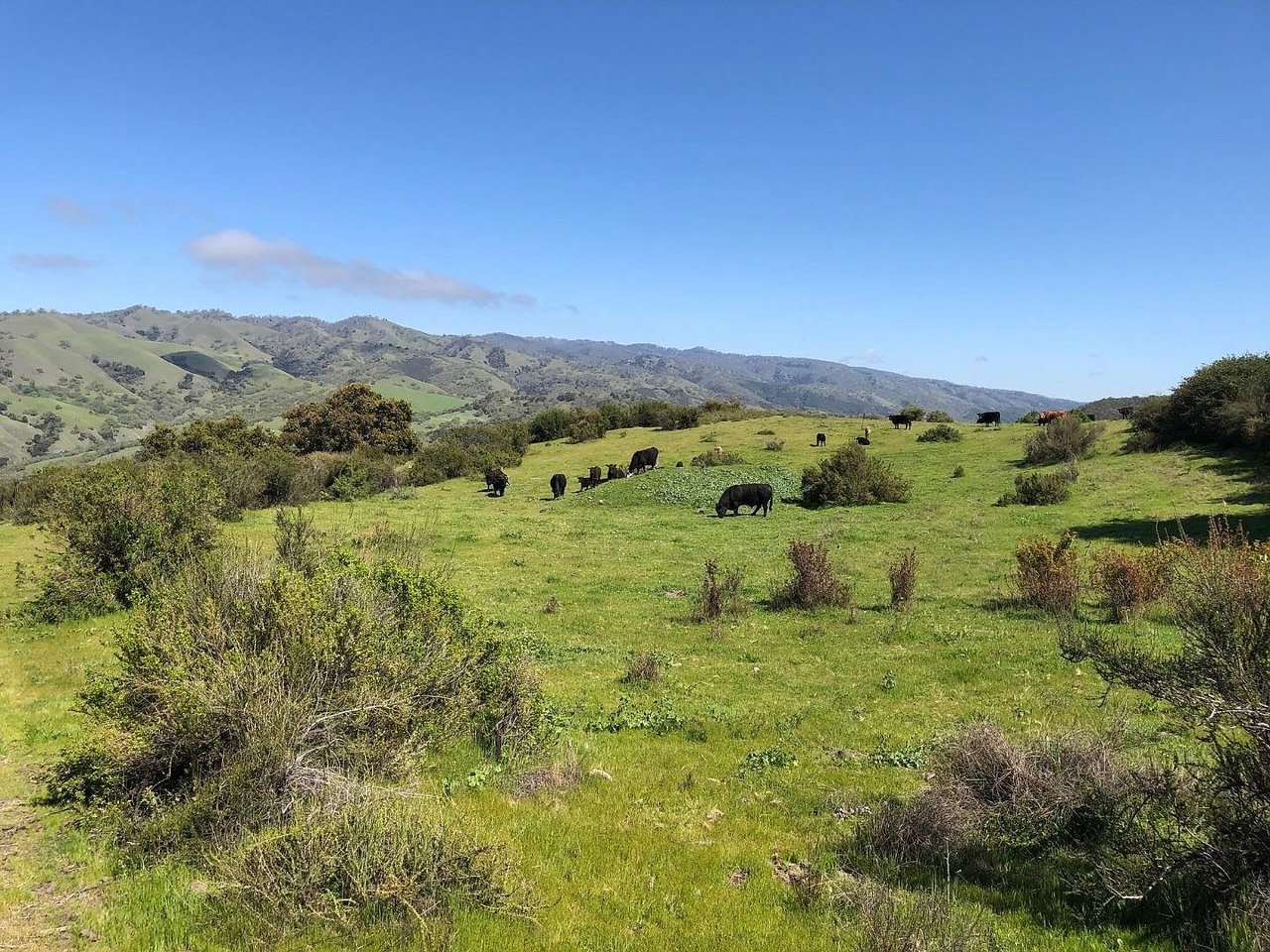
Drive Carmel Valley Road through the Village this month and you will hear it before you see it: a well-drilling rig working the old airstrip off Lupin Lane, where Santa's Fly-In has landed every December for the better part of seven decades and where Griggs Nursery stores its plant stock the rest of the year. Residents noticed. The Carmel Valley Association posted about it. And the natural read, that the 90-home subdivision announced for the site last winter is now underway, turns out to be wrong in a way that matters more than if it were right.
The project's application has lapsed. The wells are being drilled anyway. Both of those facts came from Monterey County in the same week.
What the County Actually Said
Chris Counts reported the story in the Carmel Pine Cone on September 4. County officials confirmed that developer Patrick Orosco is drilling four wells at the former Carmel Valley Airfield under a permit from Monterey County Environmental Health, and that the rig was working on the second of the four. In the same conversation, Craig Spencer of the county said the development application filed last winter was never completed: Orosco did not file a full application within 180 days of the preliminary one, so it lapsed.
Spencer's exact words: "There is no vested application for a subdivision pending on the site at this time."
The Carmel Valley Association, which has organized opposition to the project since it surfaced, said the same thing from the other side of the table. Its July 29 update reads: "Patrick Orosco and Ken Griggs have opted to let their application for the proposed airfield development lapse. We do not yet know whether they have abandoned the project altogether or intend to submit a new plan."
Then came the drilling, and CVA's Facebook post, as quoted by the Pine Cone, put the question the way everyone in the Village was asking it: "Does this mean that Patrick Orosco and Ken Griggs' proposed 90-unit development is now officially underway? No, not yet. But it does mean that they haven't given up."
What Was Proposed, and Why the Number Was 90
The plan Orosco presented last winter, as Pam Marino reported in Monterey County Now in February, covered 17.4 acres of the 29.5-acre former airfield: 70 market-rate single-family homes and 20 deed-restricted duplex units, 11 for low-income and 9 for moderate-income households, at about three units per acre against roughly four in the surrounding neighborhood. The Pine Cone's September account describes the homes as three-bedroom, two-bath single-family houses, with no apartments, plus 6.36 acres of street improvements and 5.5 acres of improved open space.
The Carmel Valley Master Plan allows 24 units on the site. The proposal was nearly four times that, and the reason it could be is the state's Builder's Remedy. Monterey County's housing element for the 2023 to 2031 cycle has been rejected twice by the state Department of Housing and Community Development, and until the county has a certified element, the county's own resource page explains, it cannot deny a qualifying housing project on general plan or zoning grounds. CEQA and the Coastal Act still apply. The Master Plan's unit cap, for these projects, does not.
Orosco's framing at the March 18 community meeting, where about 300 people filled Bobcat Hall at Tularcitos Elementary, was that 90 was the restrained option. He told the room another developer could build "600 units, minimum" under state density rules, that the Builder's Remedy minimum for his project would have been nine below-market units and he was offering 20, and that "the 24 units would never be feasible."
"There is no vested application for a subdivision pending on the site at this time."
The county's sentence is precise and it is also incomplete. No application is pending. The conditions that made a 90-unit application possible have not changed.
The Window Is Still Open
Here is the timeline that matters. The county released a Draft Program Environmental Impact Report for its housing element on July 17, 2026, with public comment closing August 31. The county's housing department says it will "formally submit the third draft" to the state, with no date attached. CVA and the Pine Cone both put likely certification at late 2026 or early 2027.
Until that certification lands, the Builder's Remedy remains available for the airfield or any other site in the unincorporated county. CVA's warning in the Pine Cone spells out the consequence: "If resubmitted before the county's long-overdue housing element is approved by the state and the Builder's Remedy is lifted in late 2026 or early 2027, the project would still be evaluated under the Builder's Remedy's very streamlined review process that largely bypasses the prevailing land use rules embodied in our Carmel Valley Master Plan."
The association also raised a second, quieter risk: that once Builder's Remedy status is locked in, "the project's valuable development rights could be sold to someone who might not feel constrained by informal promises about important design features and amenities." A lapsed application resets none of that. A new one, filed before certification, would start the 180-day clock over.
This is not hypothetical in Carmel Valley. On April 29, according to the record of that day's Planning Commission meeting, the county approved a separate Builder's Remedy project by City Ventures: a 60-lot subdivision yielding 74 units, 59 market-rate and 15 deed-restricted for low-income households, with water supplied through a Cal Am wheeling agreement for about 16 acre-feet a year and traffic mitigation at Carmel Rancho Boulevard and Carmel Valley Road. That project had water. It got approved.
What the Wells Do and Do Not Prove
Which brings the drilling back into focus. The single largest open question about the airfield project, on CVA's own list, is water. The association is raising $150,000 for independent technical analysis of water, wastewater, traffic and wildfire risk, plus CEQA review and legal support if it comes to that.
Four wells under an Environmental Health permit do not establish supply. They establish that the owners are spending money to find out. A completed well with a flow test and a water quality report is a different thing from a permit and a rig, and as of the Pine Cone's report only the second hole was underway. Anyone reading the rig as proof that the water question is answered is reading too much into it. Anyone reading the lapsed application as proof that the project is over is reading too little.
What This Means If You Are Buying in the Village
Carmel Valley's market is already sending mixed signals that have nothing to do with the airfield. Redfin's figure for zip code 93924 for the three months ending August 2026 shows a median sale price of $1,394,397, down 18 percent year over year, on 17 sales, with median days on market up 55 days to 78. In the same window, price per square foot was up 1.5 percent. That is a mix story, not a crash: the Pine Cone's recorded closings for the week of September 6 through 12 ran from $1,435,000 on Ryan Place to $4,950,000 on Valley Greens Circle, and the week before included a $749,000 sale on Carmel Valley Road next to a $1,460,000 one on Maple Court. Seventeen sales cannot average that spread into anything meaningful.
Against that backdrop, a buyer in or near the Village should treat the airfield as a live variable through early 2027 and ask:
- How close is the parcel to Lupin Lane and the airfield boundary, and what does the 17.4-acre footprint look like from the property? Distance matters more than the headline unit count.
- What is the seller disclosing about the project? A lapsed application is a fact worth stating; so is the possibility of a new one.
- Is the property's own water a well or Cal Am, and what does a 90-home neighbor on wells mean for the aquifer the property depends on? That is the question CVA's technical study is meant to answer, and it is not answered yet.
- What happens to Carmel Valley Road at the Village during a wildfire evacuation if the airfield, which has served as a staging area for fire crews, becomes a subdivision? Opponents raise this; the county has not ruled on it.
A Few Questions Worth Asking Directly
Is the airfield project approved, or is it dead? Neither. The county says no vested subdivision application is pending, and the association confirmed the original application lapsed as of July 29. The owners are drilling wells under a county permit, which the association reads as a sign they have not abandoned the idea.
Can the developer still use the Builder's Remedy? Yes, until the state certifies Monterey County's housing element. The county's own resource page says it cannot deny qualifying projects on zoning grounds without a certified element, and the current estimate for certification is late 2026 or early 2027. A new application filed before then would be reviewed under Builder's Remedy rules.
What could be built there under the normal rules? Twenty-four units under the Carmel Valley Master Plan. The developer's position is that 24 is not financially feasible and that state density targets would allow several hundred.
Does drilling wells mean the project has water? Not yet. The county confirmed a drilling permit and a rig on the second of four wells. Flow tests and water quality results are what would answer the supply question, and none have been reported.
Carmel Luxury Group reads the Pine Cone and the county planning calendar for the Valley the same way we read the MLS, because a parcel's value in the Village depends on what the county does with the parcel next door. If you are considering a home within earshot of that rig, start a confidential consultation and we will go through what is actually filed, what is not, and what the calendar looks like between now and certification.