Buying in Carmel Highlands can mean working through property-specific steps before a lender will fund: a well flow test, a septic engineer's sign-off, and an insurance binder. Those steps can take time, but they don't necessarily mean a property is unusual or a buyer is getting cold feet. They're part of planning for what the neighborhood is rather than just what any single property happens to be.
That distinction matters because the market data coming out of Carmel Highlands looks erratic in a way that Carmel-by-the-Sea or Pebble Beach data does not. Look at the raw numbers on any given quarter and you'll see swings that would make headlines if they happened in a bigger market. The real explanation isn't demand collapsing or roaring back. It's that Carmel Highlands sells so few homes in any given stretch that one or two closings can swing the whole picture in either direction.
When Escrow Counts Swing
Local brokerage transaction reports covering two consecutive quarters in 2025 tell a story that reads like whiplash if you don't know the underlying volume. In one quarter, Carmel Highlands closed three sales totaling $9.7 million, with those homes taking an average of 213 days to sell. The following quarter, reports counted nine escrows opened. Because the figures compare completed sales with newly opened escrows, they do not establish a shift from crisis to recovery or show whether underlying buyer appetite changed.
This isn't a one-time fluke. In the fourth quarter of 2023, Carmel Highlands' median sale price fell 34 percent while neighboring Pacific Grove's median rose 20 percent over the same stretch, a gap that reports from that period attributed to which price bracket happened to transact rather than any real shift in what buyers would pay. A similar whipsaw shows up in raw deal counts from an earlier reporting cycle: a quarter with two closed escrows worth about $6 million was followed by a rebound to eight closings worth $30 million, a fivefold jump in dollar volume driven by a handful of larger estates finally closing rather than any sudden change in buyer interest.
| Period | Reported activity | Total dollar volume | What it signals |
|---|---|---|---|
| An earlier reporting cycle | 2 | About $6 million | Read by some as a stalled market |
| The following quarter | 8 | $30 million | Same market, opposite headline |
| One quarter, 2025 | 3 | $9.7 million | 213 days average to sell |
| The following quarter, 2025 | 9 (escrows opened) | Not yet reported | Escrows opened; not comparable to closed sales |
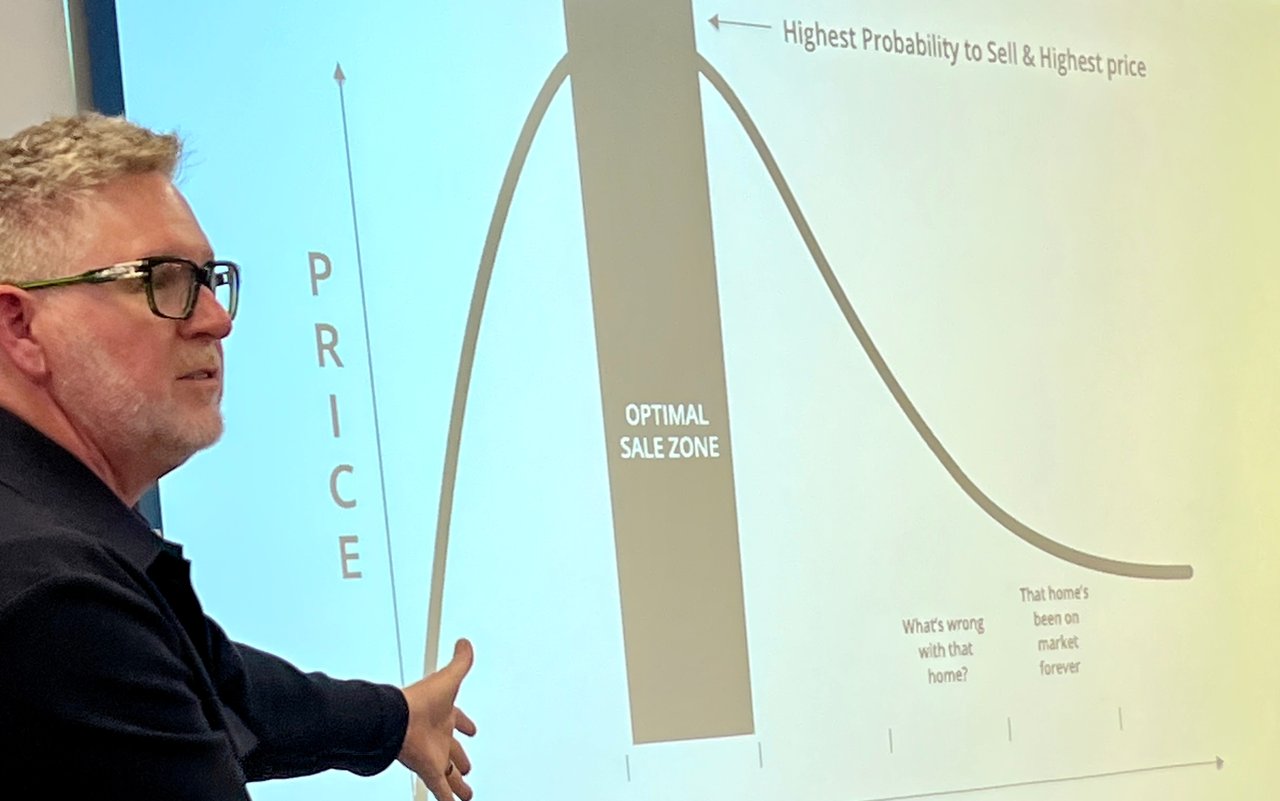
Portal-level data from mid-2026 shows a similar story from a different angle. Trailing sales put the median Carmel Highlands price at roughly $2.8 million, down about a third from a year earlier, with homes averaging around 92 days on market against a national norm in the high 50s. Read in isolation, that looks like a neighborhood in retreat. Read against a sales count that rarely breaks into double digits per quarter, it looks like exactly what it is: a market where the sample size is too thin to support the kind of trend line a bigger neighborhood can generate from routine turnover.
Property-Specific Steps That Can Add Time
The 213-day figure measures time to sell, not time from contract to closing. But property-specific steps can add time to a purchase, and they are specific enough to plan around rather than shrug off as bad luck.
Water and waste run through the property, not the county. Much of Carmel Highlands sits outside any centralized sewer system. County planning filings for Highlands-area development show individual septic systems sized in the thousands of gallons attached to single-family permits, the kind of infrastructure a buyer coming from a municipal-service neighborhood may never have had to evaluate before. The question of whether to extend a shared sewer line into the community has been debated locally for years, well-documented on a resident-run site tracking both sides of the argument, and it remains unresolved. Until it is, well capacity, septic certification, and water rights are diligence items on nearly every Highlands transaction, not exceptions.
The homeowners association here isn't the association you're picturing. Buyers moving in from planned communities governed by CC&Rs often assume every gated or private enclave works the same way. Carmel Highlands is governed instead by the Carmel Highlands Association, a nonprofit established in 1936 that operates on bylaws rather than covenants. Membership is voluntary rather than mandatory, and what it actually controls is narrower and more particular than a typical HOA: gate keys and beach easement access at Yankee Point, and a periodic newsletter called The Piper covering community news. Buyers expecting architectural review committees or shared amenity fees find something closer to a social and access club, which is a different set of questions to ask before closing than the ones a standard HOA disclosure packet answers.
Insurance underwriting can add substantial time. The Highlands' terrain, granite cliffs dropping into dense pine and cypress forest, sits squarely in the kind of steep, heavily vegetated topography that California's wildfire hazard mapping flags for accelerated fire spread. That classification pushes many Highlands properties toward the same underwriting ladder every high-risk California address now faces: an admitted carrier if the parcel still qualifies, a surplus-lines policy if it doesn't, or a FAIR Plan fire policy paired with a difference-in-conditions wrap as the fallback. Each rung down that ladder adds paperwork and time, and a lender will not fund without a bound policy in hand.
Stack a septic certification, a voluntary association with no standard disclosure template, and a multi-rung insurance placement on top of each other, and a purchase has plenty of steps to work through. But 213 days on market measures time to sell, not the minimum time the transaction requires to close.
What This Means If You're Comparing Neighborhoods
None of this is a reason to avoid Carmel Highlands. Sales figures across the last several years, thin as they are, still show serious dollar volume moving through the neighborhood, including quarters where dollar totals rivaled larger markets on far fewer transactions. What it means is that the headline stats a portal serves up for Carmel Highlands deserve a different kind of scrutiny than the same numbers would in Carmel-by-the-Sea or Pebble Beach, where enough deals close every quarter for a median to mean something close to what it claims.
If you're cross-shopping the Highlands against a larger Peninsula neighborhood, the more useful questions are the ones the median can't answer: Is the parcel on a well or connected water. Is there a septic certification on file or one that will need to be commissioned. What FireLine or Fire Hazard Severity Zone classification does the address carry, and has the seller already secured an admitted-market policy or is a FAIR Plan placement likely. Those answers tell you more about your actual timeline and carrying costs than the thin quarterly counts—three completed sales in one quarter or nine newly opened escrows in the next—ever will.
A Few Questions Worth Asking Directly
Does Carmel Highlands have municipal water and sewer service? Much of the community relies on private wells and septic systems rather than a connected municipal sewer. A community-led effort to study extending sewer service into the Highlands has been ongoing for years without full resolution, so buyers should confirm the status of both systems on any specific parcel before assuming either.
Is there a mandatory HOA? Not in the conventional sense. The Carmel Highlands Association is a voluntary, dues-based nonprofit governed by bylaws rather than CC&Rs, and its core functions center on beach easement access at Yankee Point and community communication rather than architectural control or shared-amenity fees.
Why do insurance quotes take so long here? Steep, densely wooded terrain places many Highlands parcels in higher wildfire hazard zones, which routes a meaningful share of properties through surplus-lines carriers or the California FAIR Plan rather than a standard admitted policy. Securing that coverage, and satisfying a lender's requirement for a bound policy before funding, is one of the more time-consuming steps in a Highlands closing.
If you're weighing Carmel Highlands against another stretch of the Peninsula, the data alone won't settle it. The parcel-level details will. Carmel Luxury Group has spent years walking buyers and sellers through exactly this kind of diligence on the Peninsula's smaller, more idiosyncratic markets. Start a confidential consultation and we'll go through what a specific Highlands property actually requires before you make an offer, not just what the last few sales happened to say.
This article is general information, not legal, tax or financial advice. Consult a qualified professional about your situation.