New Construction in Carmel Valley Buyer Checklist
What should you know before buying new construction in Carmel Valley?
New construction in Carmel Valley is priced and governed in layers: a base home, buyer-selected options, a homesite that may carry its own premium, and an HOA that sets ongoing rules and costs. Completion dates, warranty coverage, and cancellation rights live in the builder's contract, not in the sales brochure. William Smith's guidance to buyers is to compare the full written package against a finished existing home before treating any base price as the price.
Key Takeaways
- A Carmel Valley project can be anywhere from a proposed concept to an issued permit, and the public record, not the sales office, tells you which stage you are buying into.
- Floodplain and steep-slope conditions identified in public project documents can affect site work, cost, and delivery schedules, so ask who pays for engineering, grading, and drainage.
- A completion date should be a contract term with a stated window, permitted extensions, notice requirements, and deposit consequences.
- Upgrade and lot-premium amounts should only be relied on when they appear in the builder's dated written price sheet.
- HOA documents and the written warranty should be reviewed before your cancellation period ends, and a finished existing home remains the benchmark for comparison.
How do you verify what stage a Carmel Valley project is really in?
Check the public record before you rely on a sales presentation. Carmel Valley has active and proposed development, but individual projects sit at very different stages, and a rendering says nothing about whether a home is permitted, under construction, or ready for occupancy.
Two public examples show the range. A Monterey County environmental notice issued in May 2026 for the Carmel Rio Road project describes a 12.5-acre subdivision with 60 residential lots, 59 single-family homes ranging from 2,790 to 3,930 square feet, and 15 townhomes of roughly 1,026 square feet. That is a project in environmental review, not a finished neighborhood. At the other end, Monterey County's pending-permit records include a proposed 1,185-square-foot single-family home with a 494-square-foot deck, along with grading, fire-sprinkler, septic, and solar-related items. A permit listing shows an application moving through the county. It does not show a completed home or a guaranteed closing date.
What do the construction stages mean for you?
Each stage carries different risk. Use this table to match what you are being shown to what has actually happened.
Stage | What it tells you | What to confirm |
|---|---|---|
Environmental review | The project is proposed and still being evaluated | Scope, layout, and conditions can change before approval |
Approved subdivision | The project layout has cleared a major hurdle | Conditions of approval that touch your specific lot |
Issued building permit | The county has permitted that particular structure | Permit number, scope, and any open items |
Active construction | Work is underway on site | Written schedule updates and inspection access |
Final inspection and certificate of occupancy | The county has signed off on occupancy | A copy of the sign-off before you close |
How do floodplain and slope conditions affect your purchase?
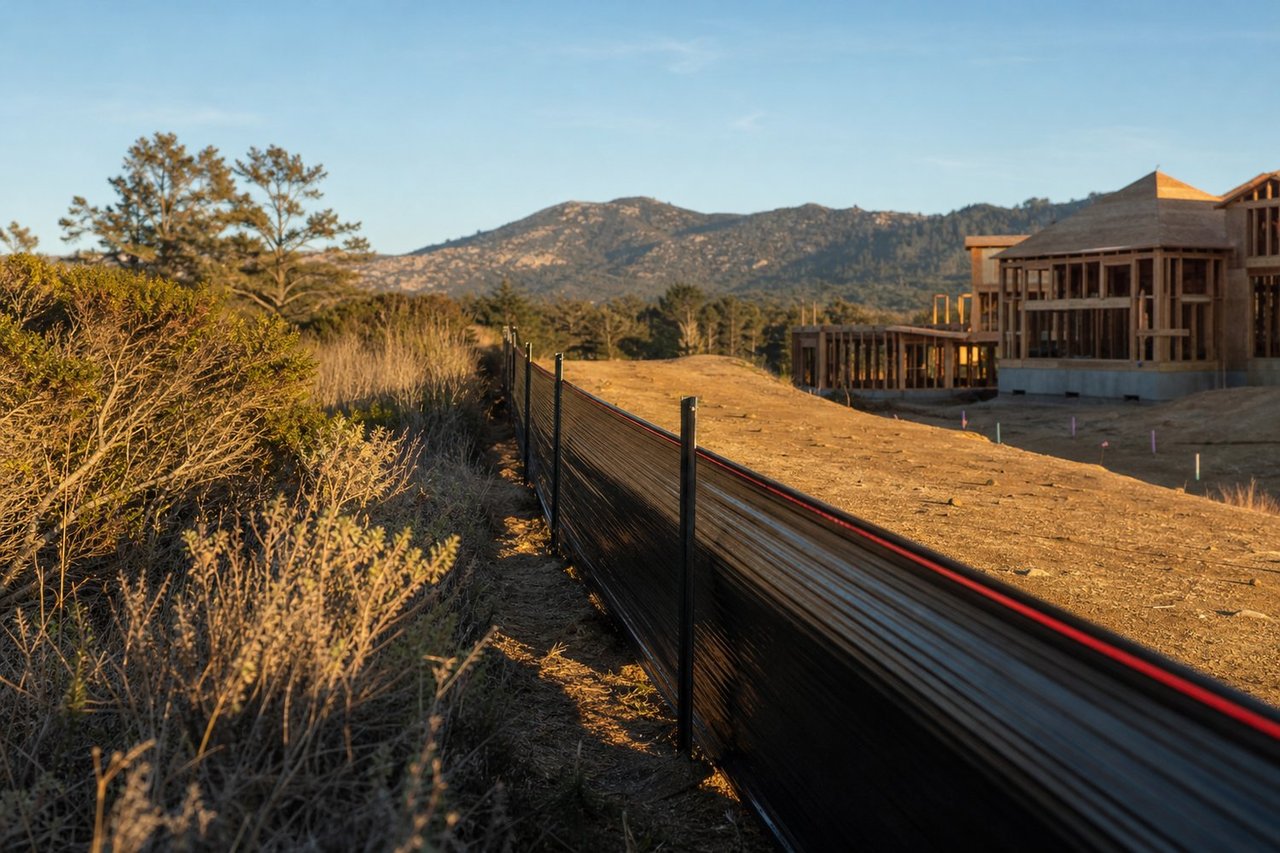
They can change both cost and timing. The Carmel Rio Road documentation identifies development within a floodplain and on slopes exceeding 25%, which brings floodplain and steep-slope permitting into the picture. For a buyer, the practical questions are whether your lot is affected, who pays for required engineering or mitigation, whether grading and drainage are included in the price, and whether those conditions create completion contingencies in the contract.
What should the completion clause say?
It should read like a contract term, not a sales estimate. Look for the anticipated completion window, the extensions the builder is allowed to take, how and when you must be notified, what happens to your deposit if the date slips, and the circumstances in which either party can cancel. The public records show how many approvals can sit between a lot and a finished home: subdivision approval, environmental review, floodplain or slope permits, grading, utilities, and individual building permits. The specific rights you hold exist only in the purchase agreement for your development, so read that document line by line.
Who carries the risk when you buy a lot instead of a finished home?
The contract decides. Public reporting on ONE Carmel describes homesites ranging from 2.5 to 12 acres, with ten offered as land-plus-build and 63 as custom lots where purchasers can use their own design and construction teams or the development's partner professionals. In a structure like that, design, permitting, construction, financing, and completion risk can fall on different parties. Before you commit, make sure you know which risks are yours.
What does the base price include, and what do upgrades and lot premiums add?
The base price covers the model and the specification the builder lists in writing, and everything outside that list is an added cost. Brochures rarely show the difference, which is why you should ask for the complete specification package and the current price sheet rather than a marketing summary.
What belongs in the specification package?
Request a written schedule that shows the base model and every included material, plus the items buyers commonly assume are covered:
- Structural options and design-center selections
- Appliances and finish packages
- Landscaping and fencing
- Solar or energy equipment
- Window coverings
- Retaining walls, driveways, and other site improvements
The public Carmel Valley sources do not verify current upgrade prices, so William tells buyers not to rely on any figure that is not in the builder's dated written documentation.
Are upgrades negotiable, and when do you have to choose?
Whether an option is negotiable is a question for the builder's written policy, and the deadlines matter as much as the prices. Compare the deadlines for design selections, change orders, price increases, credits, substitutions, and cancellations. This matters most when the home is not yet under construction or when you are buying a custom lot rather than a completed residence, because late changes can affect both cost and schedule.
How do lot premiums work?
A lot premium is an added charge attached to a specific homesite. Ask what drives it, whether it appears in writing, and whether site conditions such as slope, drainage, or floodplain location come with additional work that is or is not included. Your total depends on the lot, the model, and your selections, and that is where a side-by-side review with William earns its keep.
How does new construction in Carmel Valley compare with an existing home?
The comparison only works on total terms: what you pay, what you receive, when you can move in, and what you are responsible for afterward. A finished existing home lets you inspect the actual condition and see how the property handles weather and drainage. New construction gives you a modern specification and the chance to select finishes, with the trade-off of schedule dependence and contract complexity. Current pricing for both is best reviewed with William, since the figures change.
The area also matters. Carmel Valley covers distinct settings, which William covers in Village, Mid-Valley, and Ranch comparisons, and the broader process is outlined in his guide to buying a home in Carmel Valley.
Which HOA documents should you review?
Review them before your cancellation period expires. Ask the seller, developer, HOA, or title company for:
- The declaration, bylaws, and rules
- The current budget, reserve information, and assessment history
- Any anticipated special assessments
- Architectural standards and the maintenance map
- Insurance information
- Any development phasing provisions
Dues and governing terms are specific to each development, so take them directly from the documents rather than from a sales conversation.
What should you check in the warranty, and can you bring your own inspector?
Focus on scope and procedure. Obtain the builder's written warranty and note the coverage periods, exclusions, emergency-repair process, notice deadlines, dispute-resolution provisions, and whether manufacturer warranties are separate. Have the dispute-resolution language reviewed before you sign. On inspections, ask the builder in writing what access you have, since a construction site may limit when and how an independent inspector can visit. Also ask the sales office about its registration policy for buyers working with an agent before your first visit.
You can read what past clients say about working with William on Google, Zillow, and Realtor.com.
FAQ
What is included in the base price of a new-construction home in Carmel Valley?
The base price includes only what the builder's written specification lists. Structural changes, finish packages, appliances, landscaping, solar, garages, and site work are commonly separate items, so ask for the full specification package and compare it line by line.
What happens if a Carmel Valley new-home completion date is delayed?
The answer is in your purchase agreement. Look for the completion window, permitted extensions, notice requirements, deposit consequences, and each party's cancellation rights, because the public project records show that permitting and site work can affect schedules.
How do lot premiums work in Carmel Valley new construction?
A lot premium is an additional charge tied to a particular homesite. Ask the builder to document the amount, what drives it, and which site conditions, such as grading or drainage, are included or excluded.
What warranty does a California builder provide after closing?
The warranty is whatever the builder's written warranty and your contract say, so request it before you sign. Review coverage periods, exclusions, the emergency-repair process, notice deadlines, and dispute-resolution terms, and confirm whether manufacturer warranties are separate.
Is a new construction home in Carmel Valley a better value than an existing home?
It depends on total terms rather than the base price. Compare the full written price, including options and any lot premium, along with the completion timeline, HOA costs, and warranty, against a finished existing home. William can walk you through that comparison using current figures.
The bottom line on new construction in Carmel Valley
The price you see first is rarely the price you pay, and the contract decides who carries the risk of delay. Get the specification, price sheet, completion terms, HOA documents, and warranty in writing, then measure them against what a finished home offers. William has spent more than 36 years guiding Monterey County buyers through complex transactions, and he can help you compare a specific offering side by side. To start that conversation, schedule a consultation with William.
Equal Housing Opportunity. William Smith, Founding Broker, Carmel Luxury Group at Coldwell Banker Realty, CA-DRE #01064866. Affiliated real estate agents are independent contractor sales associates, not employees. This article is general information, not legal, tax, or financial advice; confirm your own numbers and terms with your title company, tax advisor, or lender.